Finno-Ugric Data Sharing Space
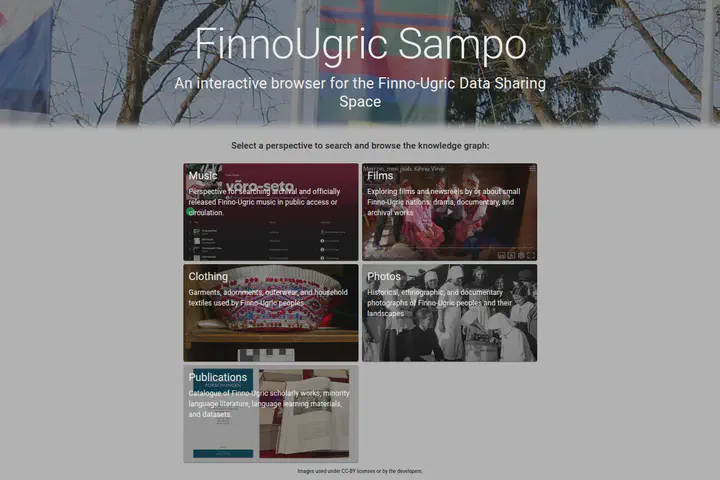 Finno-Ugric DSS – linking heritage across borders and institutions
The Finno-Ugric Data Sharing Space (DSS) helps communities, museums, and libraries bring scattered cultural records back together.
It connects garments, songs, photographs, and documents that are often stored in different countries, languages, or institutional systems, creating a shared platform for preservation and discovery.
Unlike a centralised archive, the DSS follows a federated model: collections remain with their custodians, but can be linked, annotated, and enriched collaboratively. This makes it possible to respect local knowledge, legal frameworks, and cultural sensitivities while still building a multilingual, interoperable network of heritage data.
The DSS is also our prototype for solving very difficult data problems. It deals with scattered sources, multiple languages (including non-standardised ones), and a mix of private and public data. These challenges mirror business realities: companies also work across borders, industries, and stakeholder groups — from corporate and financial partners to social and environmental actors — all using different systems, formats, and languages. By stress-testing our methods in this demanding cultural context, we develop tools and practices that are directly applicable to complex business data spaces.
The DSS is designed for NGOs, regional museums, archives, libraries, and community groups who want to:
- make their collections more visible,
- connect with related materials across borders,
- and support language preservation, cultural storytelling, and digital exhibitions.
Visit the Finno-Ugric DSS
Explore the Zenodo Community
Connect with Reprex
Competition Data Observatory
A forming new open collaboration for computational antitrust
A fully automated, open source, open data observatory that produces new indicators from open data sources and experimental big data sources, with authoritative copies and a modern API.